
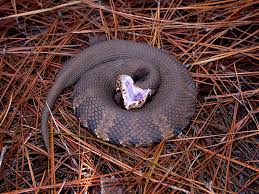
The Water Moccasin (Agkistrodon piscivorus), also commonly known as the cottonmouth, is one of North America’s most recognizable venomous snakes. Native to the southeastern United States, this semi-aquatic reptile is renowned for its distinctive black or dark brown coloring, muscular body, and the dramatic white interior of its mouth, which it displays when threatened. Water moccasins play an essential role in wetland ecosystems, acting as both predator and prey, and are important for maintaining ecological balance. Despite their fearsome reputation, these snakes are generally not aggressive and tend to avoid humans unless provoked. Understanding the water moccasin’s biology, habitat, behavior, and interactions with humans is crucial for both conservation efforts and public safety. This article delves into the water moccasin’s characteristics, distribution, diet, venom, reproduction, ecological role, threats, and how to safely coexist with this often-misunderstood snake.
1. Physical Characteristics and Identification
Water moccasins are robust, heavy-bodied snakes, typically ranging from 24 to 48 inches in length, with some individuals exceeding 6 feet. Their coloration varies with age and geography, generally ranging from olive brown to dark brown or black, often with darker crossbands that fade as the snake matures. One of the most notable identification features is the white lining of the mouth, which gives rise to the “cottonmouth” nickname; this display is used as a defensive warning to potential predators. Water moccasins have keeled scales, giving them a rough texture, and a broad, triangular head distinct from the neck. Their eyes have vertical pupils, a characteristic shared by many venomous snakes. Juveniles are more vividly patterned and often have a bright yellow or greenish tail tip, which they use as a lure to attract prey.
2. Distribution and Habitat
Water moccasins are predominantly found in the southeastern United States, including states like Florida, Georgia, Louisiana, Mississippi, and Texas, and their range extends up the Atlantic coast to parts of North Carolina and Tennessee. They are semi-aquatic, favoring wetlands, marshes, swamps, rivers, lakes, and ponds, though they are also occasionally found in floodplains and wooded areas near water sources. Their affinity for aquatic environments is tied to both their hunting strategies and thermoregulation, as water provides a stable environment for ambushing prey and avoiding extreme temperatures. These snakes are highly adaptable and can survive in areas affected by human activity, provided sufficient water sources remain.
3. Behavior and Temperament
Water moccasins are generally non-aggressive toward humans, preferring to retreat when disturbed. When cornered, however, they exhibit defensive behaviors, including coiling, vibrating the tail, and gaping their white mouths to display a cottony warning. Despite myths portraying them as relentless aggressors, most bites occur when the snake is accidentally stepped on, handled, or provoked. Water moccasins are nocturnal hunters, particularly in warmer months, though they may also be active during cooler days in spring and fall. Their semi-aquatic nature allows them to escape danger by swimming or submerging underwater, where they can remain hidden for extended periods.
4. Diet and Hunting Strategies
Water moccasins are carnivorous and opportunistic feeders, consuming a wide variety of prey. Their diet includes fish, frogs, amphibians, small mammals, birds, insects, and other reptiles, including smaller snakes. They are ambush predators, using their camouflage and patience to strike prey swiftly with their venomous fangs. Juvenile water moccasins may use their bright tail tips as a lure to attract frogs and fish, a behavior known as caudal luring. Their venom plays a critical role in subduing prey quickly, allowing the snake to feed efficiently before the prey can escape. This varied diet helps maintain the balance of aquatic and terrestrial ecosystems by controlling populations of fish, amphibians, and small mammals.
5. Venom and Human Interactions
Water moccasins are venomous snakes, and their bites can be medically significant. The venom is primarily hemotoxic, affecting blood and tissue, causing pain, swelling, and tissue damage. While bites are rarely fatal with prompt medical treatment, they can lead to serious complications if untreated. Water moccasins are generally defensive rather than aggressive toward humans, and most incidents occur when the snake is provoked or accidentally encountered. Educating the public about identification, behavior, and safe practices around water moccasins is crucial to preventing negative interactions. Using protective clothing, observing from a distance, and avoiding stepping into water where visibility is low are key safety measures.
6. Reproduction and Lifespan
Water moccasins are ovoviviparous, meaning females give birth to live young rather than laying eggs. Mating occurs in the spring, with females giving birth to 5–15 young in late summer. Newborns are typically 8–10 inches long and are fully equipped with venomous fangs, allowing immediate survival. Juveniles tend to stay near water and under cover to avoid predation. Water moccasins have a lifespan of around 10–15 years in the wild, though captive individuals may live longer. Their reproductive strategy ensures species survival despite predation and environmental challenges.
7. Ecological Role
Water moccasins are vital components of wetland ecosystems. As predators, they help regulate populations of fish, amphibians, and small mammals, maintaining ecological balance. They are also prey for larger predators, such as alligators, birds of prey, and larger snakes, contributing to the food web. By controlling prey populations, water moccasins prevent overpopulation and resource depletion, indirectly supporting the health of aquatic and riparian habitats. Their presence is an indicator of wetland health, as declining populations may reflect environmental degradation, pollution, or habitat loss.
8. Threats and Conservation
Although water moccasins are not currently endangered, they face several threats:
-
Habitat destruction from urban development and wetland drainage.
-
Pollution of water bodies affecting prey abundance and water quality.
-
Persecution by humans due to fear and misconceptions about their aggression.
-
Climate change impacting wetland ecosystems and prey availability.
Conservation efforts focus on habitat protection, public education, and wetland restoration. Promoting coexistence and reducing fear-based killings is essential to maintaining healthy populations and ecological balance.
9. How to Safely Coexist With Water Moccasins
Coexisting safely with water moccasins involves understanding their behavior and habitats. Key practices include:
-
Observe from a distance; never attempt to handle or harass the snake.
-
Be cautious near water edges, especially in murky or overgrown areas.
-
Educate yourself and others about identifying water moccasins versus non-venomous water snakes.
-
Control rodent populations safely, as attracting prey may also attract snakes.
By respecting the snake’s space and natural behavior, humans can reduce the risk of bites while allowing water moccasins to fulfill their ecological role.
10. FAQs About Water Moccasins
Q1: What is a water moccasin?
A: A water moccasin, or cottonmouth, is a venomous semi-aquatic snake native to the southeastern United States, recognized for its dark coloring and white mouth lining.
Q2: Are water moccasins aggressive?
A: No, they are generally defensive and prefer to avoid humans, only striking when threatened or provoked.
Q3: How dangerous is a bite?
A: While bites are venomous and painful, fatalities are rare with prompt medical treatment. Venom can cause tissue damage and swelling.
Q4: Where do water moccasins live?
A: They inhabit freshwater environments like swamps, rivers, lakes, and marshes across the southeastern U.S.
Q5: How can I safely avoid them?
A: Avoid walking through overgrown water edges, wear protective boots if wading, and do not attempt to handle or corner the snake.
Conclusion
The water moccasin is a fascinating and ecologically important snake that plays a vital role in the wetlands of the southeastern United States. While its venom and appearance inspire caution, understanding its behavior, diet, reproduction, and habitat allows humans to safely coexist with it. Education and respect for wildlife are essential for reducing unnecessary fear and promoting conservation. By appreciating the water moccasin’s ecological contributions, people can foster a greater understanding of wetland ecosystems, supporting biodiversity and the health of aquatic environments. Proper awareness, safety measures, and habitat preservation ensure that both humans and water moccasins can share the wetlands harmoniously, preserving this iconic snake for generations to come.
