
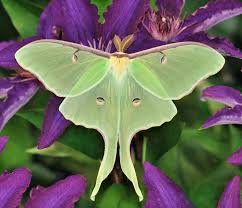
The Luna moth (Actias luna) is one of the most iconic and visually striking moths in North America. Known for its pale green wings, long tails, and large size, this nocturnal insect captivates both scientists and nature enthusiasts alike. Luna moths belong to the Saturniidae family, commonly referred to as giant silk moths, which are characterized by their impressive wingspans and striking appearance. Found primarily in the forests of eastern North America, from Canada to Florida, Luna moths are notable not only for their beauty but also for their fascinating life cycle, ecological importance, and unique adaptations. Despite their brief adult lifespan—usually lasting only a week—they play a critical role in local ecosystems as pollinators and as part of the food web. This article explores the Luna moth’s biology, life cycle, habitat, behavior, ecological significance, threats, and conservation, providing a comprehensive guide to understanding one of nature’s most mesmerizing insects.
1. Physical Characteristics and Appearance
Luna moths are easily recognizable due to their pale lime-green wings, feathery antennae, and long, tapering hindwing tails, which may reach up to 4 inches in length. The wingspan of an adult Luna moth can range from 3 to 4.5 inches, making it one of the larger moth species in North America. The forewings feature eye-like spots that serve as a defense mechanism against predators, while the hindwing tails may confuse echolocating bats, making it harder for them to successfully capture the moth. Males are generally more vibrant and have larger antennae compared to females, which they use to detect pheromones released by potential mates. Luna moths do not feed in their adult stage; instead, their sole focus is reproduction, relying on energy stored from their caterpillar stage. Their striking appearance has made them a symbol of transformation and ephemeral beauty in both scientific and cultural contexts.
2. Distribution and Habitat
Luna moths inhabit deciduous forests across eastern North America, from Nova Scotia to Florida, and as far west as Texas and Minnesota. Their preferred habitat consists of areas rich in host trees, such as hickory, walnut, birch, sweetgum, and sumac, which serve as primary food sources for their caterpillars. Luna moths thrive in undisturbed woodlands with access to water sources and minimal artificial lighting, as light pollution can interfere with their nocturnal activities and mating behaviors. Their distribution is influenced by climate, tree species availability, and seasonal patterns, with peak adult emergence occurring in late spring and summer depending on geographic location. Understanding their habitat preferences is essential for conservation efforts and for creating suitable environments in both natural and managed settings.
3. Life Cycle and Metamorphosis
The Luna moth undergoes a complete metamorphosis with four distinct stages: egg, larva (caterpillar), pupa, and adult.
-
Egg Stage: Females lay clusters of small, pale green eggs on the underside of host tree leaves. The eggs hatch in approximately 1–2 weeks.
-
Larval Stage: Luna moth caterpillars are bright green with yellow lines along their sides and small red spots along the back. During this stage, they consume large quantities of leaves to build energy reserves for pupation.
-
Pupal Stage: The caterpillar spins a cocoon, often attaching itself to tree branches or leaf litter, where it undergoes transformation into an adult moth. This stage can last from 2–3 weeks, but in colder climates, pupae may overwinter before emerging.
-
Adult Stage: Adults emerge with fully developed wings, ready to mate and reproduce. Interestingly, adults have no mouthparts and do not feed; they live only 7–10 days, during which their sole purpose is reproduction.
This life cycle illustrates the incredible adaptability and efficiency of Luna moths, maximizing reproductive success in a short adult lifespan while relying on the caterpillar stage to accumulate sufficient energy.
4. Feeding Habits and Diet
While adult Luna moths do not feed, their caterpillar stage is voracious. Larvae primarily consume the leaves of deciduous trees such as hickory, walnut, sweetgum, birch, and sumac, growing rapidly and molting several times as they increase in size. The caterpillar’s ability to efficiently convert foliage into stored energy is critical for survival during the adult stage, where feeding is impossible. This specialized diet ensures that Luna moths are closely tied to forest ecosystems and emphasizes the importance of maintaining healthy host tree populations.
5. Behavior and Adaptations
Luna moths exhibit several fascinating behaviors and adaptations that aid in survival:
-
Nocturnal Activity: Adults are active primarily at night, reducing predation risks from birds and other daytime predators.
-
Mating Pheromones: Females release powerful pheromones to attract males from several miles away, demonstrating a highly efficient reproductive strategy.
-
Defensive Features: Eye spots on the wings deter predators, while elongated hindwing tails can deflect bat attacks.
-
Short Adult Lifespan: Their ephemeral adult existence reduces exposure to predators and focuses energy entirely on mating and reproduction.
These behaviors highlight the Luna moth’s evolutionary adaptations for survival and reproduction, illustrating the intricate relationship between anatomy, behavior, and ecological pressures.
6. Ecological Importance
Luna moths play an important role in forest ecosystems despite their short adult lifespan. As caterpillars, they contribute to nutrient cycling by consuming foliage, while also serving as a critical food source for birds, small mammals, and parasitic insects. Adult moths, although not feeding, are part of the nocturnal food web, providing nourishment for bats, spiders, and other nocturnal predators. Additionally, Luna moths can act as bioindicators, with population health reflecting the condition of their forest habitats, making them valuable for ecological studies and environmental monitoring.
7. Threats and Conservation
Several factors threaten Luna moth populations:
-
Habitat Loss: Deforestation, urbanization, and removal of host trees reduce suitable breeding and feeding grounds.
-
Light Pollution: Artificial lighting interferes with nocturnal navigation and mating behaviors.
-
Pesticides: Chemical use in forests and gardens can kill larvae and pupae.
-
Climate Change: Shifts in temperature and seasonal patterns may disrupt emergence and reproduction cycles.
Conservation efforts include preserving forest habitats, planting native host trees, reducing pesticide use, and minimizing artificial lighting near moth habitats. Educational programs aimed at increasing awareness about nocturnal insects also support long-term population stability.
8. Cultural Significance and Symbolism
The Luna moth has captured the human imagination due to its ethereal appearance and brief adult lifespan. In various cultures, moths, including Luna moths, symbolize transformation, renewal, and ephemeral beauty. Artists, photographers, and nature enthusiasts often use Luna moth imagery to evoke wonder and contemplation of life cycles and natural beauty. Their presence in folklore and contemporary art underscores the enduring fascination humans have with nocturnal creatures and the symbolism of transformation in nature.
9. FAQs About Luna Moths
Q1: What is a Luna moth?
A: The Luna moth (Actias luna) is a large, pale green nocturnal moth found in North America, belonging to the giant silk moth family.
Q2: Where do Luna moths live?
A: Luna moths inhabit deciduous forests in eastern North America, from Canada to Florida, and prefer areas with abundant host trees.
Q3: Do Luna moths eat?
A: Adult Luna moths do not eat; they live off energy stored from their caterpillar stage. Caterpillars feed on leaves from hickory, walnut, birch, sweetgum, and sumac trees.
Q4: How long do Luna moths live?
A: Adults live about 7–10 days, while the larval and pupal stages can last several weeks or months depending on environmental conditions.
Q5: Why are Luna moths important?
A: They contribute to forest ecosystems as caterpillars feeding on leaves, as prey for predators, and as bioindicators of environmental health.
Conclusion
The Luna moth is a remarkable example of nature’s elegance and adaptability. With its stunning appearance, fascinating life cycle, and ecological significance, it captivates scientists, naturalists, and the general public alike. Despite a short adult lifespan, Luna moths play vital roles in forest ecosystems, serving as both herbivores in their larval stage and prey for nocturnal predators as adults. Threats from habitat loss, light pollution, pesticides, and climate change highlight the importance of conservation and environmental stewardship to ensure their continued presence in North American forests. The Luna moth reminds us of the intricate beauty and delicate balance of natural systems, symbolizing transformation, ephemeral beauty, and the profound interconnectedness of life. By understanding and protecting Luna moths, we celebrate not only their individual magnificence but also the broader biodiversity of the forests they inhabit.
